Every year, hundreds of thousands of Americans undergo gallbladder surgery. While common, this procedure carries a hidden risk: Bile Duct Injury. We’re here to change that — through education, advocacy, and the human stories behind the statistics.
We are survivors, medical professionals, and advocates dedicated to eliminating preventable surgical errors and supporting those whose lives have been changed by BDI.
A Patient-First Community
Hundreds of thousands undergo gallbladder surgery every year. We make sure no patient walks that road alone — and that every voice helps protect the next.
Compassionate Care
We promote routine ICG-fluorescence imaging and the “Critical View of Safety” — the protocols proven to dramatically reduce iatrogenic bile duct injuries.
Advocacy for Zero BDI
We work with hepatobiliary centers, safety organizations, and lawmakers to make advanced visualization a standard of care — everywhere it’s available.
The Scope of the Problem
A common surgery,
a hidden risk.
Bile duct injury is the leading cause of surgical malpractice claims in the United States — and the rate has actually risen with laparoscopic and robotic protocols.
750k+
Laparoscopic gallbladder removals each year in the U.S.
Varma, 2010
1 in 55
Patients experience a bile duct injury — up to 1.8% incidence.
Rogers, 2013
23,000
Estimated injuries per year in the U.S. alone.
HCUP, 2025
4x
Higher first-year mortality for BDI patients vs. those without injury.
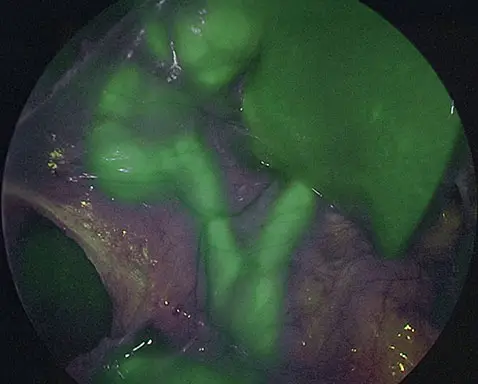
Misperception – the surgeon simply not being able to see the duct — causes 71% to 97% of injuries. Indocyanine Green (ICG) fluorescence imaging makes the bile ducts glow bright green under a near-infrared camera, allowing realtime visualization through fat and inflammation.
Learn more about the use of fluorescence guided surgery and what to ask your doctor before gallbladder surgery.
Behind every statistic is a person whose life was changed in an instant. These are testimonies of resilience, recovery, and the urgent importance of surgical safety – shared so the newly diagnosed know they are not alone.
“I went in for a routine procedure. I came out fighting for my life. Now I share my story so the next person never has to.”